Systems for modern
governance.
Quietly intelligent infrastructure for permitting, GIS, and operational orchestration — built for the agencies running critical public systems.
A modular OS for civic infrastructure.
Every component speaks a shared operational language — composable, auditable, and quietly coordinated by an AI-native kernel.

Jurisdiction-aware LLM that ingests each agency's own code, ordinances, and policy as it onboards.
Engineered for public trust.
Security-first foundation
Built on AWS with continuous posture monitoring, dependency scanning, and SOC 2-aligned policies and controls.
Interoperability engine
Native adapters for legacy ERPs, asset management systems, and GIS estates.
Sub-second spatial queries
Optimized indexing for utility, transit, and parcel-scale data.
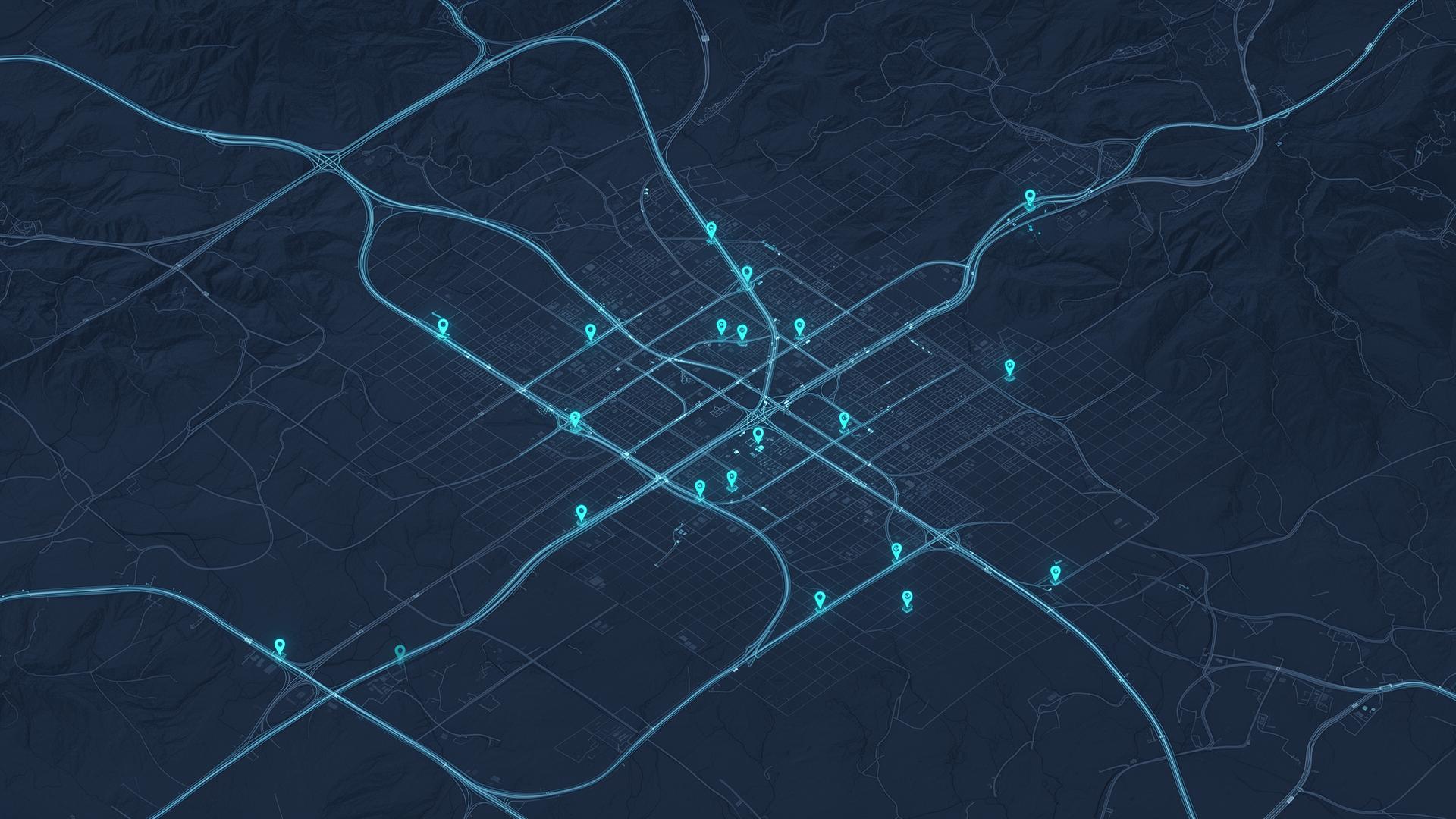
Geospatial intelligence, layered onto permitting and the right-of-way.
Spatial context where it actually changes outcomes — permit review, ROW scheduling, conflict detection between concurrent projects, and field inspection follow-through.
- Live permit tracking with status, conditions, and inspection milestones surfaced on the map
- Parcel-level context — ownership, zoning, and historical permit lineage in one click
- Inspection evidence (photos, AR captures, notes) tied to the parcel and permit of record
- Cross-project conflict avoidance across overlapping work, utilities, and jurisdictions
- ROW applications scored against active work, closures, and moratoria before review
Permitting, approvals, and compliance — orchestrated end-to-end.
Replace fragmented forms and inboxes with auditable, AI-assisted pipelines that route work, verify policy, and surface bottlenecks before they appear.
Intake
Structured applications with intelligent field extraction from uploaded documents.
Review
Policy-aware routing across departments with SLA tracking and escalation logic.
Issuance
Digital permits, signed records, and downstream GIS updates — instantly.
From council vote to codebook — traced and confirmed.
- Agenda, resolution, and ordinance pipeline with full versioning
- Legal Impact Engine traces how new law propagates into the municipal codebook
- Human-confirmed AI suggestions flag affected code sections and dependencies
- Role-aware queues across planning, code, public works, and legal
- Immutable audit log of every legislative action and codebook revision
Built for the systems legacy stacks were never designed for.
A side-by-side of how Lupo's AI-native architecture differs from conventional government and enterprise software.
* Reference architecture · subject to deployment configuration
Institutional integrity, by design.
A security-first architecture aligned with the rigorous standards of modern public-sector governance — continuous cloud posture monitoring, dependency scanning, and policy frameworks aligned to SOC 2, HIPAA, and government privacy regimes.
What we're building — and what we refuse to build.
"We're not here to digitize the 1998 permit counter. We're building the operating layer civic teams will actually want to use in 2030."
"Every AI step is human-confirmed and audit-traced. No black-box automation in workflows where due process matters."
"Legacy gov-tech sells inertia. We ship monthly because governance shouldn't be frozen between procurement cycles."
Ready to modernize your civic infrastructure?
Join public agencies using Lupo to orchestrate their vital operations.